Look at the flowers before the leaves
Common witch hazel is a woodland shrub with narrow yellow petals. Its fall flowering makes it worth watching after many other woodland plants have finished. Look closely at a flower cluster and then look back at the whole branch. A wide photo of yellow leaves alone will rarely give you enough to identify it. NC State Extension plant profile
What to photograph
Take three pictures. Get the whole plant, one branch with leaves or buds, and a close view of the flowers if they’re present. Note whether the plant sits along an edge or under the canopy. A picture from the path is enough. Compare the details with Extension’s photographs when you get home.
Why the month can mislead you
Common witch hazel is one member of a group that includes plants with different bloom times. A garden cultivar or another species may flower at a different time of year. Check the plant label at a garden or use several identifying details together. Even on the same property, plants on different exposures may look different in a given week.
Make it part of a greenway walk
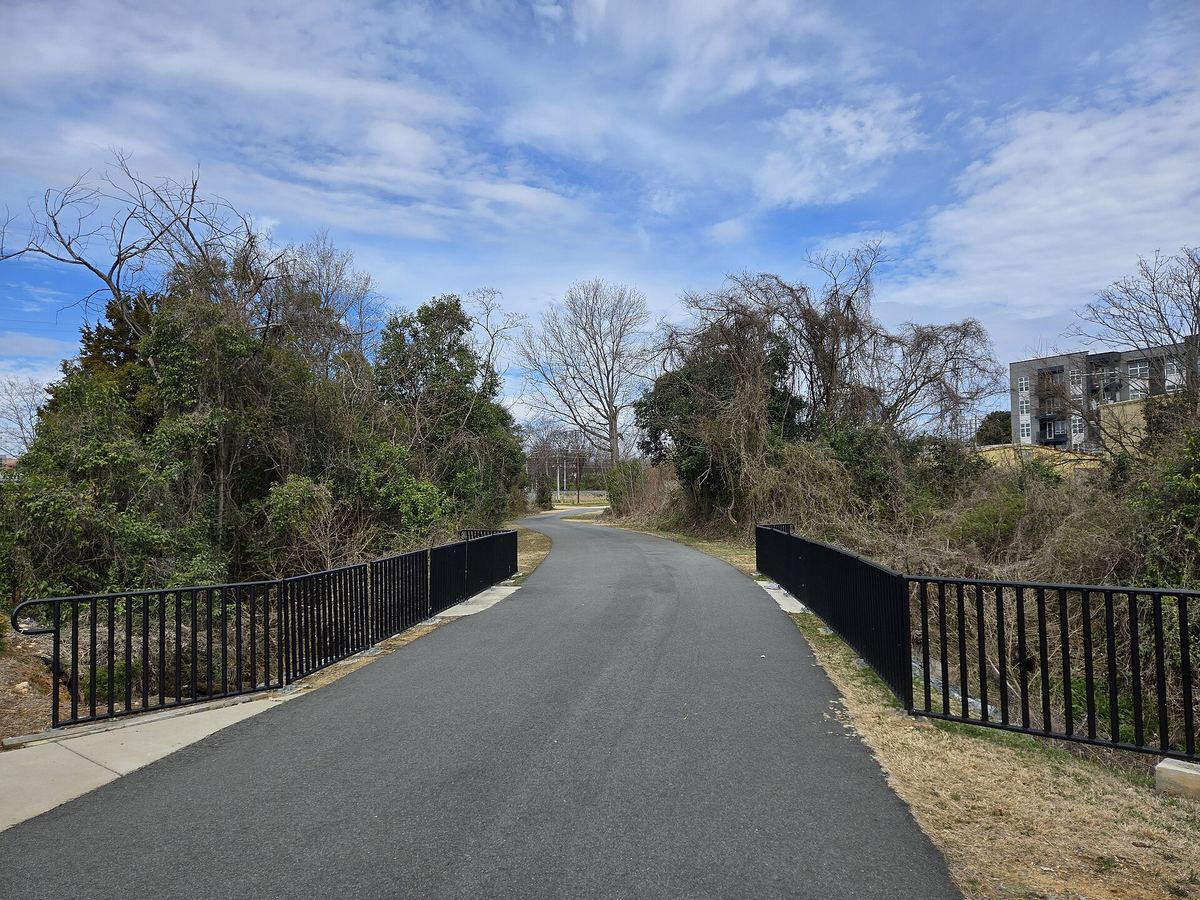
Pick a short section of Little Sugar Creek Greenway with an entrance you know. Walk slowly enough to notice the wooded edges, then turn around where you planned. Treat the walk as a chance to practice observing shrubs. The creek photograph illustrates the setting, and the guide makes no claim that a particular shrub has been found at that entrance. Choose a greenway entrance
If you want one in your yard
Measure the space you can give a mature shrub and look at the light during the growing season. Take those notes to the Extension profile before ordering a plant. If winter flowers are what you want most, compare species and cultivar labels carefully so you choose for the right season.
Compare the flower with a common lookalike
If you find a shrub with rounded, fringed white flower clusters in spring, compare it with fothergilla before calling it witch hazel. For a fall observation, start with the yellow, ribbon-like petals and look for several flowers on the same twig. Photograph the twig from the side so the petal shape is visible. The most useful field notes record the date and whether the shrub was in a labeled garden or growing along a public path. NC State fothergilla profile
Read the full guides
- Charlotte November Weather and First Frost
- What to Harvest and Protect in a Charlotte November Garden
- Shopping Charlotte Farmers Markets in November
- A November Walk at Freedom Park and Little Sugar Creek
- A November Museum Afternoon in Uptown Charlotte
- What to Wear for a November Day Out in Charlotte
- A Half Day in Uptown Charlotte in November
- Charlotte Marathon Spectator and Road Closure Guide