.jpg)
We have not measured a doorway or tested a lift. We do not rate venues, and we do not aggregate any of this into ticks and crosses, because accessibility is not a tick or a cross.
If a place you want isn't on this page, that means we haven't researched it yet — not that it isn't accessible. Ask the venue. And always check the venue's own current page before you travel: provision changes, and so do buildings.
Charlotte Douglas International Airport
CLT publishes more accessibility material than any other organisation we looked at in Charlotte, and some of it changes how you should plan.

Wheelchair assistance is the airline's responsibility
The airport states this directly: wheelchair services and other disability assistance are managed by the airlines, not the airport. It recommends contacting your airline at least 24 hours before travel.
And the detail that catches people out:
Wheelchair transport to the gate is prioritised based on departure time, not arrival time at the airport.
Assistance meeting points are on the Ticketing/Departures level — Door 4 for American Airlines passengers, Doors 1 to 3 for all other airlines.
The Sunflower programme
CLT has taken part in the Hidden Disabilities Sunflower Program since 30 June 2021 — a discreet sunflower-branded item signalling to staff that you may need more time or support, for a disability that is not visible.
The airport's terms, in its own words:
There are no prerequisites for asking for an item. No documentation is required to receive an item; no questions should be asked.
Available at the Airport Information Desk, the Visitor Information Center, the USO Lounge, The Club CLT, from airport chaplains in blue and yellow reflective vests, and at International Arrivals/Customs.

Aira
Free and unlimited at CLT, and usable on airport property before you reach the terminal: a visual interpreting service connecting blind and low-vision passengers to a trained agent by smartphone camera.
"I Speak" buttons
Staff who speak two or more languages wear yellow oval "I Speak" buttons. The airport states they cover 29 languages.
Accessible-travel committee
CLT runs Accessible Travel CLT, an ADA advisory committee of people with lived experience of accessibility, which meets quarterly and publishes its agendas and minutes. Contact: ADACoordinator@cltairport.com.
Everything above, with current hours and locations: CLT Accessibility Full layover detail — Mother's Rooms, family restrooms, service animal relief areas, charging: → A layover at Charlotte Douglas
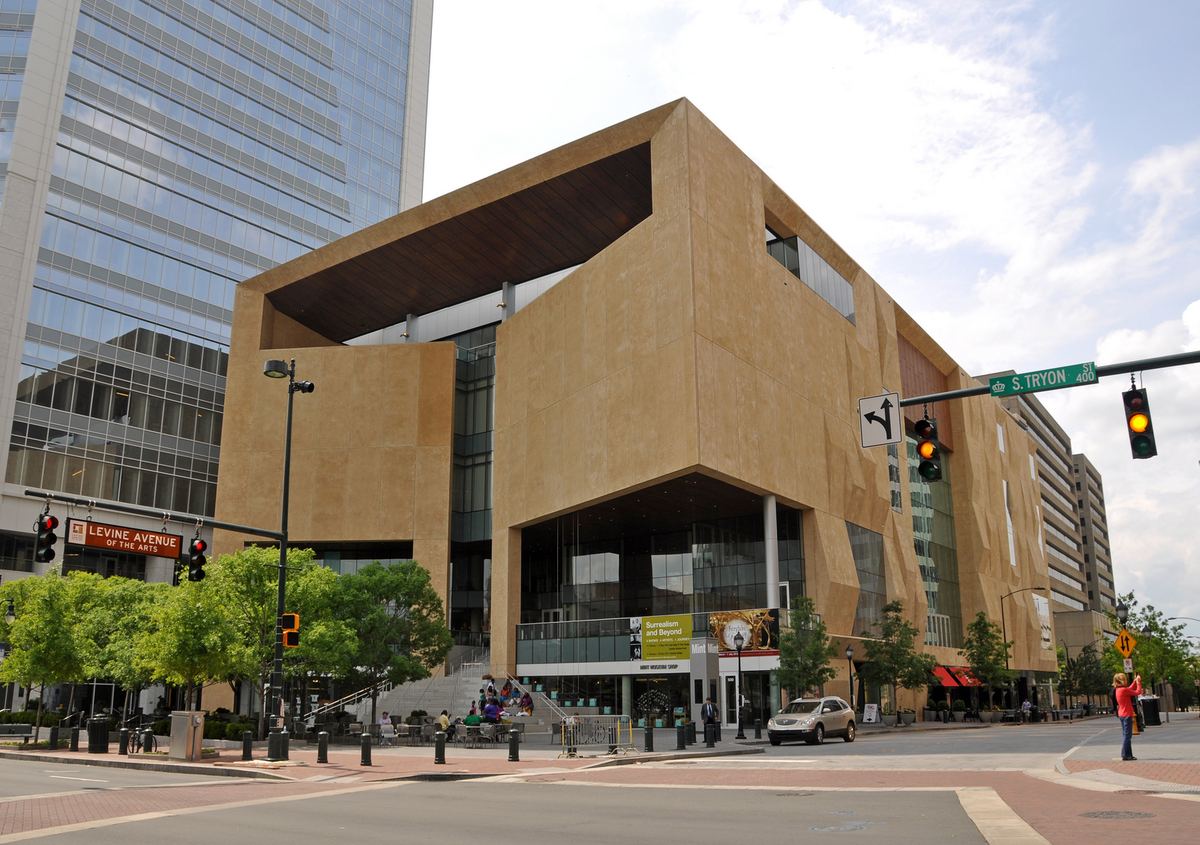
The Mint Museum
The Mint states it does not discriminate on the basis of disability and will provide auxiliary aids and services, written materials in alternative formats, and reasonable modifications to policies and procedures on request.
Getting there and getting around
Drop-off and pickup is permitted at Mint Museum Randolph's main entrance and near Mint Museum Uptown's lift access on Levine Avenue of the Arts.
Accessible parking, including van spaces, is on Levels P1 and P2 of the Levine Center for the Arts garage at Uptown. Randolph has four accessible spaces, one of them a van space.
Doorways to outdoor areas have automatic openers. Lifts serve all floors.
Manual wheelchairs can be checked out free at the front desk of both buildings, first come first served. Motorised wheelchairs are permitted.
Facilities
Wheelchair-accessible restrooms on every floor at Uptown; the Mint states Randolph's restrooms are "generally usable by persons with disabilities" — their wording, and we keep it rather than upgrading it.
Accessible drinking fountains on every floor at Uptown, and on Level 1 at Randolph. Wheelchair spaces in the James B. Duke Auditorium (Uptown) and the Van Every Theatre (Randolph). Single-user, all-gender restrooms at both sites.
Sensory and developmental provision
This is the most detailed we found anywhere in Charlotte:
- Social Narratives for both locations, for families and visitors with developmental disabilities.
- S.P.A.R.K. Explorer Packs at each location, checked out at the front desk — fidget keychains, wiggle seats, headphones and weighted lap pads.
- Wellness Rooms at both sites: at Uptown on Level 4, right of the lifts; at Randolph, right of the front desk opposite the gift shop. Both with chairs, a bin and a mini fridge.
And
Support persons receive complimentary admission to ticketed exhibitions where the person with the disability cannot otherwise attend alone. Service animals are always welcome at both locations. Tours can be arranged and customised for adult and children's groups with varied disabilities.
Mint Museum accessibility: mintmuseum.org/accessibility See also: Gold — and how the Mint building got to Randolph Road
Charlotte Museum of History
We want to single this one out, not because it claims the most, but because it is honest about what it cannot offer — which is what an accessibility page is actually for.
The main building is fully wheelchair accessible, with accessible single-stall restrooms and seating in the main lobby and limited galleries. Audio tours of the historic campus are included with admission, with guides available at the front desk.
The 1774 Alexander Homesite sits on top of a hill. The museum states that guided tours include periods of walking and periods of standing for several minutes; that a paved path runs from the museum building to the Homesite, usable by a motorised wheelchair or one that can be pushed; and that the herb garden and path to the kitchen are gravel.
And then, plainly:
The interiors of the house, log kitchen, and springhouse are not accessible by wheelchair.
The museum invites visitors to say in advance if anyone in their party would benefit from accommodations, and offers a virtual 360-degree tour of the Rock House.
Charlotte Museum of History accessibility: charlottemuseum.org/visit/accessibility
Harvey B. Gantt Center
551 S. Tryon Street, inside the Levine Center for the Arts, on the corner of Brooklyn Village Avenue.
We have to be straight with you about this one. The whole of the Gantt Center's published guidance for visitors with disabilities is two sentences: wheelchairs are available, and patrons who require special arrangements are asked to notify staff so accommodations can be made. There is nothing published about step-free access, lifts, accessible parking, sensory provision or assistive listening.
That is not us failing to find the page — we found it, and that is what is on it. If you need to know something specific, ring or email before you go, and treat anything you read elsewhere claiming detailed provision here with suspicion, because the Center itself does not publish it.
What we can tell you about getting there:
- By light rail, the Center directs visitors to take the LYNX Blue Line to Brooklyn Village Avenue station and walk one block northeast. The Center is on the corner of Brooklyn Village Avenue and South Tryon Street.
- Parking is in the Levine Center for the Arts garage, entrance at 101 W. Brooklyn Village Avenue, with visitor parking on levels P1 and P2. Ask the Visitor Experience team for a discounted parking pass when you arrive and use it on the way out — easy to miss, and it costs you if you do.
Bank of America Stadium
Everything below is what the stadium itself publishes. We have not tested any of it, and arrangements of this kind change — check the stadium's accessibility page before you travel.
There is no accessible parking at the stadium
This is the thing to know first, and it surprises people. Bank of America Stadium states plainly that it "does not have reserved handicap parking".
What exists instead, for Panthers games only, is a game-day shuttle run by Atrium Health Carolinas Medical Center. An accessible parking placard is required. Guests park at 720 E. Morehead St in Uptown, entering from the E. Morehead side, and are shuttled to the corner of Mint and Graham Street beside the stadium. There is a charge per vehicle, service begins roughly two hours before kickoff, and the return shuttle starts at half time. The stadium publishes the current fee and a phone number for the service — we deliberately do not reprint the price here, because that is exactly the figure that goes stale.
For anyone being dropped off rather than parking: drop-off for guests with disabilities is at the corner of Mint and Morehead Streets.
Getting in and getting about
- ADA ramps outside every gate, with signage directing guests to them.
- Elevators at the North, East and South gates — no pass is needed to use them.
- A wheelchair service operates from benches near the Guest Relations booths at sections 109, 119 and 130. Staff will take you to your seat and collect you afterwards if asked. Stadium wheelchairs cannot be kept or taken off the property, so if you need one throughout, bring your own.
- Guest Relations booths at each main entrance gate on the 100 level and beside the 500 level elevator lobbies.
Seats
Designated accessible wheelchair seating is in sections 105, 118, 125 and 138 in the lower bowl and 522, 525, 531 and 534 in the upper level. A limited number of single-game accessible tickets are released each year, first come first served.
One catch worth knowing: if you bought through Ticketmaster, the accessible seating request has to be made the same way you bought, and the stadium states it is at Ticketmaster's discretion and subject to availability. If you are already inside and cannot use your seat, Guest Relations or the ticket office can relocate you.
Everything else the stadium states
Closed captioning is provided for all public address announcements, on the 400 level ribbon board in four locations, visible from every seat. All concession stands, bars and restrooms are accessible. There is a private nursing room on every level, reached through the Guest Relations booths across from sections 119, 313 and 525. Certified, leashed service animals are welcome under ADA Titles II and III.
Tours
As at September 2026 the Panthers state that public tours are running "on a very limited, requested basis" and that not all requests will be accommodated. Requests go through a form on their tours page. Do not travel for a tour without one confirmed.
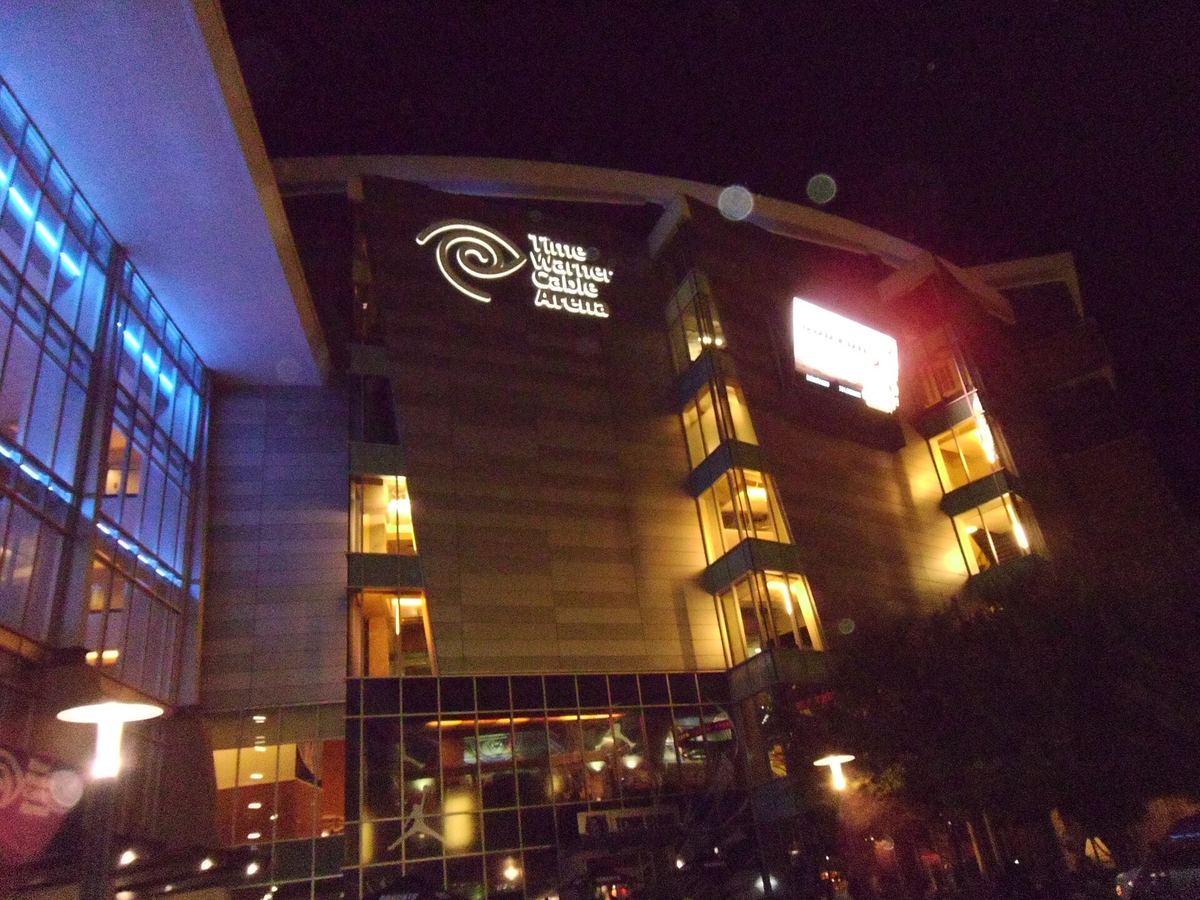
Spectrum Center
333 East Trade Street. The arena states that it "satisfies, and in many cases, exceeds the requirements of the Americans with Disabilities Act". Again, these are its own statements.
- Where to go in. The arena recommends the Fifth Street side, by the disabled drop-off, which is right in front of the door. The Trade Street entrance also works, with a lift directly inside the main entrance.
- Seats. Wheelchair-accessible and companion seating is spread through the arena, subject to availability, and is booked by phone through Guest Services rather than online.
- Assistive listening. Devices are free at Guest Services, just off the main lobby outside section 102, against an ID deposit. If you bring your own headset and receiver you can pick the system up as a standard FM broadcast.
- Service animals. Animals are not admitted, with an exception for guide dogs and service animals.
- Interpreting for concerts — this one has a deadline. Requests must reach Guest Services no later than three weeks after concert ticket sales begin. That is easy to miss and easy to miss the window on, so ask early.
Getting around
CATS, Charlotte's transit agency, states that all of its fixed route buses and trains are accessible and meet Americans with Disabilities Act requirements.
What's on the vehicles
- Lifts or ramps on all buses, accommodating at least 800 lbs
- Low floors or kneeling capability for anyone who struggles with steps
- Priority seating for disabled passengers at the front; operators secure wheelchairs and scooters
- Push strips to ask the operator to stop and deploy the lift
- An automated system that displays and announces time points, major intersections and landmarks — and operators will announce upcoming stops on request
- On light rail: priority seating near the entrance and level boarding from the platform
Service animals
CATS states that people protected under the ADA may travel with service animals in its vehicles and facilities, and that customers travelling with a service animal receive the same service as everyone else.
Travel Training — the thing almost nobody knows about
CATS offers one-to-one training for disabled people who want to learn to use the fixed route buses or light rail. If the barrier is confidence or unfamiliarity rather than the vehicle, this is the service for it.
Braille, and reasonable modifications
CATS states it can provide schedules and other documents in braille on request, and that it will make reasonable modifications to its policies, practices and procedures on request.
Special Transportation Service — the paratransit route
STS is door-to-door transport for people whose disabilities prevent them using the fixed route network. CATS is explicit that it is reserved for that group, and points everyone else to the fixed route services.
Getting certified is a multi-step process, and worth understanding before you start:
- Apply. You must describe your disability and how it affects your ability to use fixed route services. The application must be verified and signed by a medical, rehabilitation or healthcare professional.
- Post it back. The return address is in Gardena, California — the eligibility function is handled off-site. That surprises people, so we mention it.
- Interview. You will be contacted to schedule an in-person interview, and possibly a functional assessment. All interviews are held at the Charlotte Transportation Center, 310 East Trade Street.
- Determination. One of three outcomes: eligible, eligible with conditions, or ineligible.
- Appeal, if needed. Applicants found ineligible or eligible with conditions may appeal, and CATS states an independent panel hears appeals — one that includes a person with a disability.
The application is published in eight languages besides English: Chinese, French, Gujarati, Hindi, Korean, Russian, Spanish and Vietnamese.
CATS accessibility: charlottenc.gov/CATS/Get-to-Know-CATS/Accessibility STS eligibility: Certification/Eligibility See also: Getting around Charlotte · Charlotte in other languages
Accessible taxis from the airport
CLT states wheelchair-accessible taxis are available and can be requested from the airport's Parking Dispatch Office. Taxis operate from the Arrivals/Baggage Claim outer curb, Zone 1.
Outdoors
County dog parks are open daily from 7:30am to sunset, with vaccination requirements and a minimum age for entry to the off-leash areas.
*On greenways and walking routes, we are not yet able to tell you what you need. Our route research records start and finish points, distance, continuity and crossings — but not surface type and gradient systematically, and without those we will not tell you a greenway is wheelchair-usable. That work is
Places on this page, in detail
- Community · public art
- Transportation · public art
- Transportation · public art
- Mint Museum Randolph · museums
Read next
Charlotte's greenways: what they are and where they go
Mecklenburg County's greenways are not, strictly speaking, footpaths. The county classes them as linear…
Places of worship in Charlotte
What this is, and what it is not. This is a researched selection of Charlotte's faith communities, not…
Libraries in Charlotte and Mecklenburg County
Charlotte Mecklenburg Library runs 23 locations across the county. A library card is the single most…
Carolina Raptor Center, Huntersville
It started with one bird. In 1975 someone brought an injured broad-winged hawk to Dr Richard Brown, an…
Charlotte-Print
A print counter in University City. Plan sets and blueprints, signage, business stationery and binding — quoted and proofed before anything goes on the press.
Charlotte Mailbox
Private mailboxes with a street-style address rather than a PO Box number, from a staffed counter — held behind the counter or in a box you can open at any hour.