In this guide
3500 Shamrock Drive, Charlotte, NC 28215 · (704) 568-1774
Plan your visit
Start with the museum’s hours and notices, then check the tour arrangements. Museum admission and a place on the Rock House tour are two separate things to keep track of. If the house is the reason you are coming, make it the fixed point in your plan and fit the galleries around it.
The museum’s regular schedule, checked October 4, 2026, is Tuesday–Saturday, 11 a.m.–5 p.m., with Sunday and Monday closed. Parking for cars and buses is free. Check the museum’s notices for exceptions before leaving home.
Admission and the Rock House tour
At the October 4 check, general admission was $15 plus tax for adults; $12 plus tax for seniors 62 and over, children 4–17 and students; and $10 plus tax for veterans. Children 0–3 and museum members were listed as free. The HistoPad was a separate $5-plus-tax add-on. Use the museum’s ticket page for the current categories and any admission programs that apply to your group.
General admission covers the indoor exhibits, Siloam School, the homesite and its self-guided audio tour. Online admission tickets are valid for 60 days. The museum’s FAQ says pre-registered tickets are non-refundable. They do not guarantee a place on a Rock House interior tour, which is allocated first-come, first-served on the day.
The museum’s guided-tour schedule currently lists 2 p.m. Tuesday–Friday and noon and 2 p.m. on Saturdays. These tours are included with admission and limited to 25 people. The self-guided homesite tour takes about 40 minutes and includes the kitchen and springhouse; it does not take you inside the Rock House. Ask about availability when you arrive rather than assuming an online ticket reserves the house.
Groups larger than ten should use the museum’s private-tour arrangements. The operator asks those groups to schedule at least a month ahead.
How much time to allow
The museum’s FAQ suggests about two hours for a general visit, or 2½–3 hours with a Rock House tour. For the current augmented exhibition together with the historic homesite, the exhibition page suggests 3–4 hours.
Choose the shorter or longer plan according to what you want to do, rather than treating either estimate as a time limit. With a short visit, decide which building or exhibition matters most before you arrive. With an afternoon to spare, leave some unassigned time between the house, school and galleries; their different opening arrangements matter more than seeing everything in a particular order.
The Rock House and the people behind it
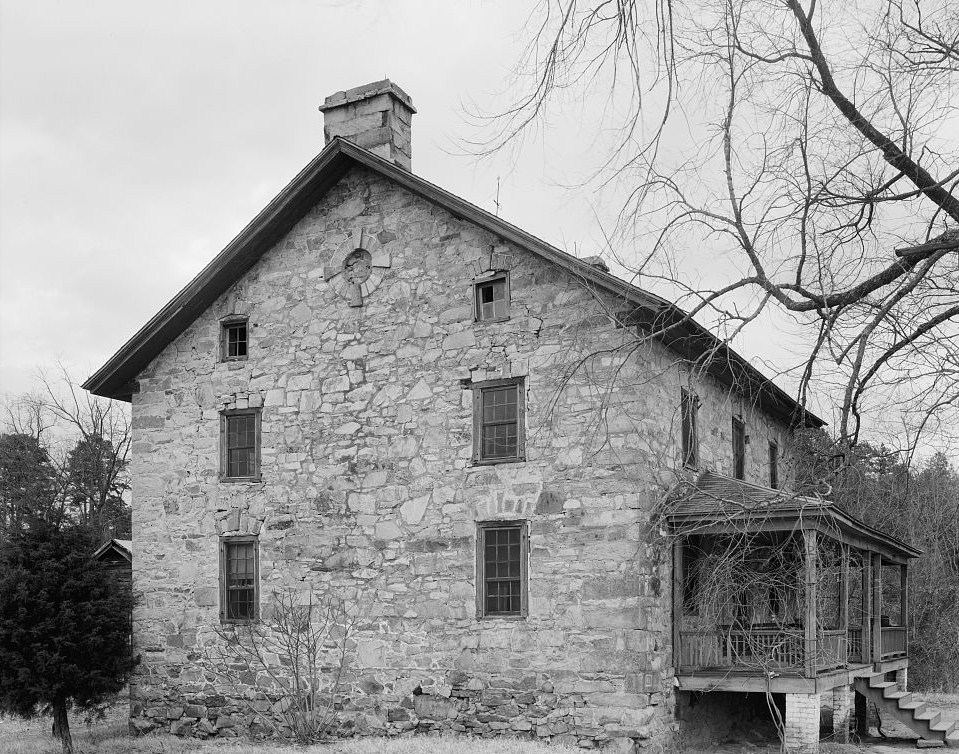
The museum occupies eight wooded acres in east Charlotte. It identifies the Alexander Rock House, completed in 1774, as Mecklenburg County’s oldest surviving house and the last standing home of a framer of North Carolina’s first constitution. The building belongs to the story of a prosperous household, a working plantation and the politics of revolution. Museum history
Hezekiah Alexander was a blacksmith and planter as well as a political leader. He served on the committees that drafted North Carolina’s 1776 constitution and declaration of rights. That connection gives the house a place in state history, but looking only at the owner leaves much of the site unexplained. NCpedia biography
An original house in a restored landscape
The Rock House survives from the eighteenth century. The nearby log kitchen is a reconstruction, the springhouse is reconstructed, and the period barn was moved here. The state’s historical account notes that the springhouse incorporates portions of its original walls. These distinctions are worth keeping in mind as you walk: a historic campus can contain old fabric, careful reconstruction and relocated buildings at the same time. Museum organization · North Carolina historical marker account
Look at the scale of the stone house and consider the work that went into building and running it. The state’s account points to the stone arches above doors and windows, and relates the house’s design to architecture in Maryland and Pennsylvania. Restoration is part of the story too; the campus you visit has been preserved and interpreted through later generations’ choices.
The house has been on the National Register of Historic Places since April 17, 1970. Its federal record recognizes both architectural and political significance.

Slavery at the homesite
The museum’s research identifies at least 17 people enslaved by Hezekiah Alexander during his lifetime. That is a cumulative historical count, not a claim that all 17 lived here together at one moment. The surviving records are uneven: some people are known chiefly by name, while others appear in accounts that suggest their work. The museum identifies Bet as a woman who may have cooked in the household’s separate kitchen. Homesite history
Read the house, kitchen and working landscape together. Ask whose labor supported the household, what the surviving evidence can tell us and whose experiences are harder to recover. Those questions belong alongside the constitutional history, rather than being left for the end of a tour.
The land’s story also predates the house. The museum reports archaeological evidence of Indigenous use over thousands of years, while noting that the finds do not establish a permanent settlement here before the Rock House. That is a limit of the evidence, not a reason to begin the story only with the Alexanders.
A careful note on revolutionary history
Charlotte’s Revolutionary history includes two often-confused names. The Mecklenburg Resolves of May 31, 1775 are documented; the claimed Mecklenburg Declaration of Independence of May 20 remains disputed. The state’s historical-marker account makes the distinction explicitly. If a tour or exhibition prompts you to investigate further, keep those two documents separate rather than treating every reference to “Meck Dec” as settled evidence.
Siloam School
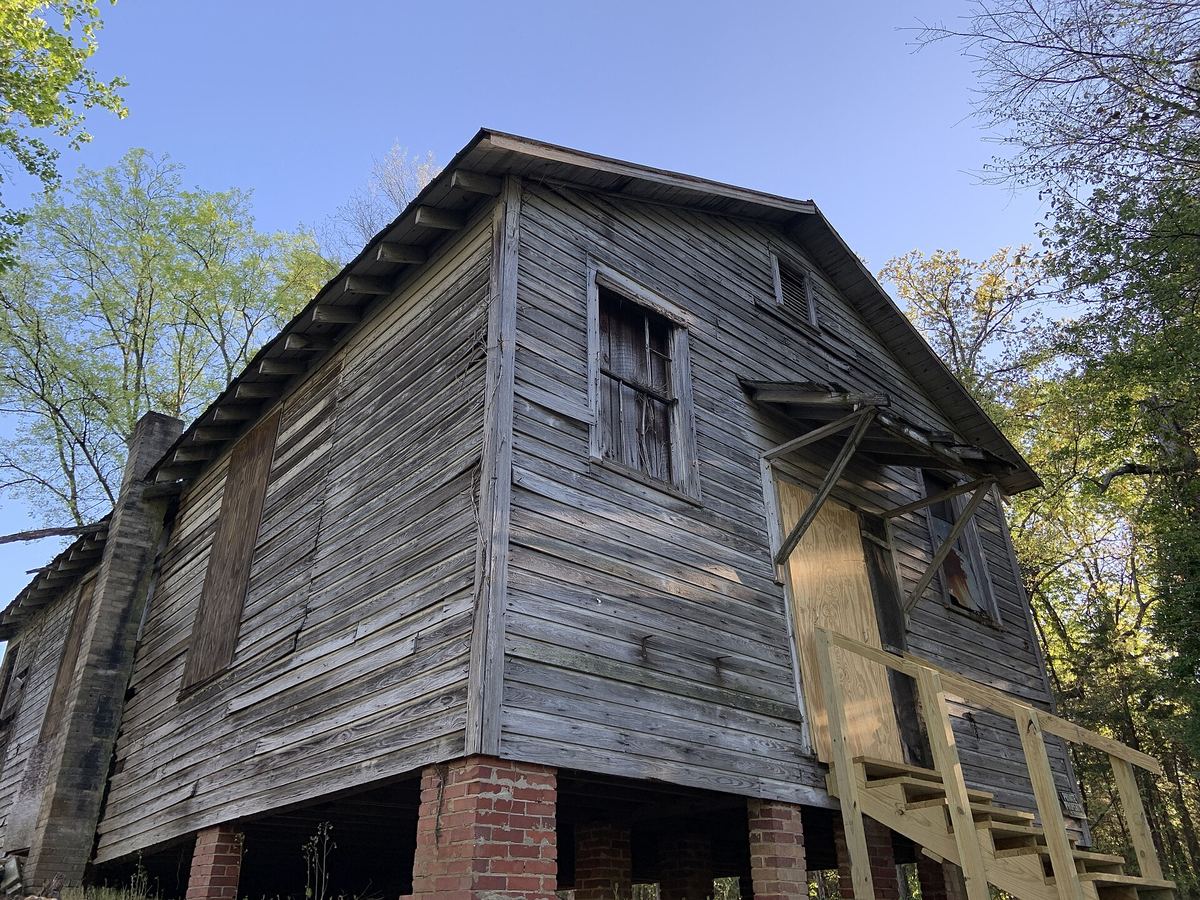
Siloam brings the visit into the history of Black education under segregation. Built around 1920 by its community, the one-teacher school served Black children in the rural Mallard Creek area. It followed a Rosenwald school design, but the museum says the Rosenwald Fund did not finance this particular building. “Rosenwald-designed” is the useful distinction. Siloam history
The National Register nomination describes a classroom, a smaller industrial room and cloakrooms, with the design making deliberate use of daylight. It also records the building’s later use as a home and an automotive workshop. Those changes help explain why preservation involved recovering the school’s earlier form rather than simply leaving a building untouched.
The school moved to the museum campus on September 8, 2023 and reopened on June 15, 2024. Visit it at the museum, not at the former Mallard Creek location recorded in older designation documents. At the October 4, 2026 check, the museum’s Siloam page listed interior access Tuesday–Friday, 1–2 p.m., and Saturday, 1–2 p.m. and 3–4 p.m. Check that page when planning around the school.
The older photograph below shows the school before relocation and restoration. It documents what was saved; it is not a picture of the building’s present condition.

Inside the museum and around the grounds
The museum has four galleries with permanent and changing exhibitions. Check the current exhibition information if you have a particular subject in mind; an older photograph or review may describe a show that has finished.
At the October 4 check, American Revolution: The Augmented Exhibition and its local-history companion, Revolution in the Carolinas, were advertised through April 2027. The exhibition uses a tablet-based experience to explore Revolutionary events, including a local section on the Carolinas. It gives you another way to approach the period alongside the house and outdoor site. Exhibition details
The American Freedom Bell is another landmark on the grounds. Donated by the Belk Foundation in 2000, it is seven feet tall and seven feet wide and weighs 7½ tons. Its subject of freedom offers a useful question to carry between the different parts of the campus: how did the meaning and reality of freedom change for the people represented here? Grounds information
The museum is also listed in the Smithsonian Affiliations directory. That identifies an institutional relationship; use the museum’s own admission information to plan your visit.
Access and a comfortable visit
The main museum building is wheelchair accessible and has accessible single-stall restrooms. Seating is available in the lobby and some galleries. The homesite is uphill. The museum describes its paved approach as usable by a motorized wheelchair or a wheelchair pushed by a companion; the herb garden and approach to the kitchen include gravel. The interiors of the Rock House, kitchen and springhouse are not wheelchair accessible. Guided tours include walking and standing. Museum accessibility information
If access or stamina will shape your day, ask about the particular route and buildings you hope to visit, including Siloam School. A general description of an accessible museum building does not answer every question about a historic campus. The museum also links a virtual Rock House tour from its accessibility page; check that it works on your device before relying on it as part of the visit.
Tours generally run in rain, but the museum may delay or cancel them for dangerous weather. Historic buildings have no heating or air-conditioning, so dress for the outdoor conditions. Tour details
There is no café, food service or vending machine. The museum permits closed water bottles, but not other food or drinks in galleries and historic buildings. First-come picnic areas are behind the museum near the creek. Personal photography is generally welcome, subject to exhibit-specific restrictions; professional photography needs advance permission. Pets are not allowed, although service dogs are. Visitor FAQ
For a family visit, choose one question to follow rather than expecting every child to read every label: how did a household keep food cool, what work did a school need each morning, or what can a building tell you that a photograph cannot? These are ways to organize your visit, not a promise of a particular children’s activity on the day.
What to pair with the museum
Reedy Creek Nature Center and Preserve is an option for more outdoor time, at 2986 Rocky River Road. Treat it as a separate stop and check the county’s current information and trail map. The nature center and preserve have different opening schedules.
For a library stop, use Hickory Grove Library’s current branch page, which lists 5935 Hickory Grove Road. A public-art or historic-property record can preserve an older address, so use the operating venue’s details when setting directions. Neither suggestion assumes a verified walking connection from the museum.
Sources and limits
Visitor information and linked historical sources were checked on October 4, 2026. This guide draws on the museum’s own pages, National Register documentation, North Carolina historical sources and the relevant public operators. It does not claim a firsthand inspection. Prices, tour capacity, exhibitions, individual-building access and closure notices can change; check the museum before making a visit depend on them.
Places on this page, in detail
- Reedy Creek Nature Center · parks and open space
- Community · public art
- Siloam School · Historic places
Read next
Charlotte playgrounds, spraygrounds and water play
Choose a Charlotte-area playground by the facilities your visit needs. Compare six starting points, find official water-play information and explore the larger county inventory below.
Bechtler Museum of Modern Art
Most museum collections are assembled. This one was lived with.
Carowinds: Plan Your Visit
Plan a Carowinds day around the rides your group wants, the ticket that covers your visit and the seasonal experiences operating on your date. Check individual ride requirements before buying, especially when children or access needs will shape the day.
Charlotte on a rainy day
For an easy indoor start, choose a library visit or one museum. For swimming or a recreation-center activity, find the actual public session before traveling. A building marked as indoor on a map is not necessarily open for a drop-in visit.
Discovery Place Science
Choose hands-on museum time, a dome show or both, then budget for your group's ages and the parking deck. This guide separates the published starting prices from a real date-specific example.
Historic Rosedale
The neighbours called it Frew's Folly. Charlotte postmaster and tax collector Archibald Frew's elaborate Federal-style house was completed in 1815, according to Historic Rosedale's history. Today, the house and its remaining gardens offer a way into the city's early history, including the lives of the people enslaved here. Choose a guided house tour or a grounds-only visit, and check the calendar before setting off.